Washing, pressing and framing a finished piece
Short answer
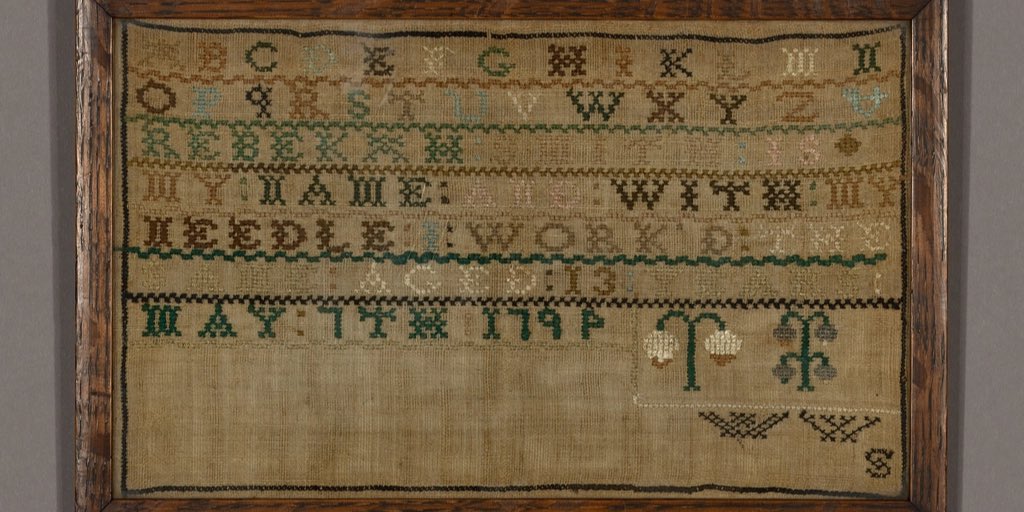
Wash it, even if it looks clean. Months of handling leave oils in the fabric that yellow years later, and gridding marks have to come out before any heat touches them. Cold water, a little mild soap, no rubbing and no wringing: press the water out in a towel and dry it flat. Then press it face down on a thick towel, so the stitches sink into the pile instead of being crushed. Mount it over acid-free board, laced or pinned at the back — never taped, never glued.
Wash it, even if it looks clean
The piece has been in your hands for weeks. Skin oils and the dust that sticks to them are in the fabric whether you can see them or not, and they are what turns a white Aida the colour of weak tea a decade after it was framed. Washing now is the only chance you get: once it is laced over a board behind glass, it is finished.
There is also a deadline on the gridding. Water-soluble pen comes out in cold water and is set permanently by heat, so it has to be washed before it is pressed — not the other way around. Marks that have been ironed are not coming back out.
How to wash it
- Cold or lukewarm water in a clean basin. No bleach, no stain remover, and nothing with enzymes.
- A little mild liquid soap. Move the piece through the water and squeeze gently; do not rub the stitches against each other.
- Rinse until the water runs clear, which takes longer than you expect on a full-coverage piece.
- If a dark red or a navy releases colour, keep rinsing in cold water and do not let it stand wet against pale fabric. It is the sitting, not the washing, that stains.
- Never wring it. Roll it in a clean white towel and press down to take the water out.
- Dry it flat on a dry towel, right side up, away from direct sun and away from radiators.
Pressing
Press it while it is still slightly damp, which does most of the work for you. The one rule that matters: the iron goes on the back, never on the stitches.
- Lay a thick dry towel on the board and put the piece face down on it. The stitches sink into the pile and keep their shape.
- Medium heat, cotton setting, and a cloth between the iron and the back of the work.
- Press and lift rather than sliding, working from the middle outwards.
- Hoop marks come out under the iron if the piece is damp. If they do not, damp that area again rather than pressing harder.
- Never iron the front. It flattens the floss and gives it a shine that does not come back off.
Mounting is what keeps it flat
Everything about whether a framed piece still looks right in ten years is decided here, not at the frame shop. The fabric has to be held flat and under even tension, by something that will not react with it.
- Cut acid-free mounting board to the frame's opening, not to the design.
- Find the centre of the fabric by counting threads, not by eye, and line it up with the centre of the board.
- Lace the margins across the back with strong thread, pulling opposite sides alternately, or pin into the edge of the board with stainless pins.
- Never adhesive tape, never glue, never self-adhesive board. The adhesive yellows, it stains through to the front, and it cannot be undone.
Glass, or no glass
Needlework is traditionally framed without glass, which lets the texture show and lets the fabric breathe. Glass protects it from dust and from curious fingers, and both are valid — but if there is glass, the stitches must not touch it.
Use a mount with an opening, or a spacer inside the rebate, so there is air between the glass and the surface. Stitches pressed against glass flatten, and any condensation on the inside of the glass goes straight into the fabric. Then hang it anywhere that is not in direct sunlight: DMC floss is colourfast to washing, not to five years of afternoon sun.
Finishing in a hoop instead
A small piece looks right left in a wooden hoop, and it takes twenty minutes rather than a trip to a framer. Trim the fabric to about 4 cm beyond the ring, run a gathering stitch around the edge, pull it tight over the back and tie it off. A circle of felt glued over the back covers the gathers and keeps dust out.
Common questions
- Can I wash a finished cross stitch?
- Yes, and you should. By hand, in cold or lukewarm water with a little mild soap, no rubbing and no wringing. Roll it in a towel to take the water out and dry it flat.
- Will the thread colours run?
- DMC floss is colourfast, but strong reds and dark blues can release a little dye on a first wash. Rinse in cold water until it runs clear, and never leave the piece sitting wet with a dark colour against pale fabric.
- How do I remove the gridding lines?
- Rinse them out in cold water before the piece goes anywhere near an iron. Heat sets water-soluble marker permanently, and a line that has been pressed is there for good.
- Should I iron a finished cross stitch?
- Press it face down on a thick towel, with a cloth between the iron and the back, while it is still slightly damp. Never put the iron on the front of the stitches.
Turn your own photo into a pattern
Upload a picture and the chart builds in your browser — DMC colours, finished size and thread list, before you pay for anything.

Read next
Updated 06/10/2026