What you need to start cross stitch
Short answer
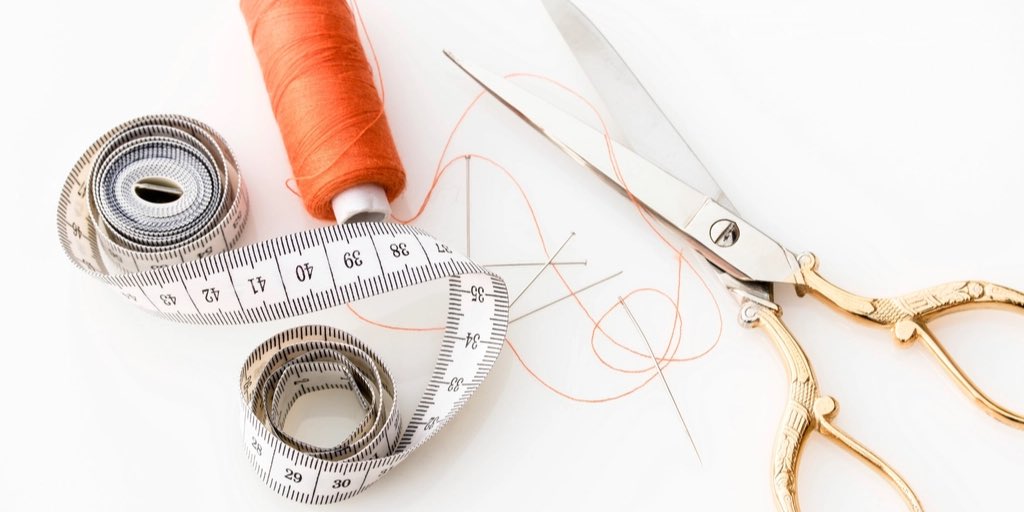
Seven things, and you may own three of them already: Aida fabric, DMC floss in the numbers the chart asks for, a blunt tapestry needle, small sharp scissors kept for thread, a hoop, a light you can angle over your shoulder, and the chart. On 14-count Aida that means a size 24 needle and two strands at a time. Everything else a craft shop will offer you — magnifiers, bobbins, needle minders, thread conditioner — answers a problem you have not met yet. Buy those when you meet it.
The list
- Fabric. 14-count Aida to begin with: the holes are easy to see and the finished piece stays a sensible size.
- Thread. DMC six-strand floss, in the numbers the chart lists. Buy all of one colour at the same time so the dye lots match.
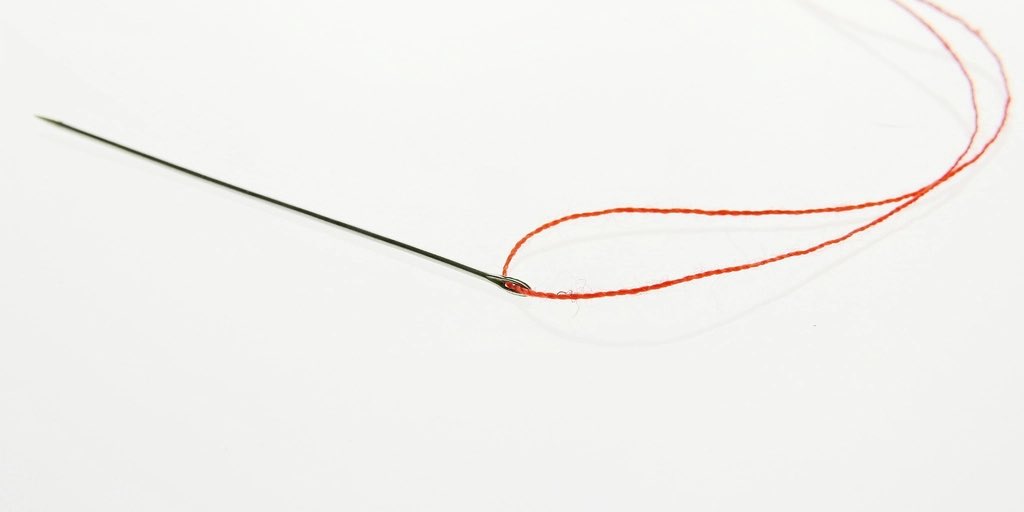
- Needle. A tapestry needle — blunt point, long eye. Size 24 on 14-count. A packet of mixed sizes costs about as much as a coffee.
- Scissors. Small, sharp right to the tip, and used for nothing but thread. Paper blunts them in one go.
- A hoop. A 15 cm wooden one is plenty to start, and it is what keeps your tension even.
- Light. More of it than you think: an angled lamp pointing at the work from over your shoulder.
- The chart, printed or on a tablet, and something to keep your place in it.
What to spend money on, and what not to
Two things on that list are worth paying for, and they are the two you notice every minute you stitch: the light and the scissors. A lamp you can angle changes how long you can work before your eyes give up, and scissors that cut cleanly to the tip save you picking at frayed ends all evening.
The rest is a commodity. Cheap Aida is the same Aida, DMC floss costs what it costs everywhere, and a thirty-euro hoop does not stitch better than a five-euro one. The only hoop to avoid is a thin plastic one that will not hold the fabric tight, because losing tension mid-row is a small irritation that happens a hundred times.
What you do not need yet
- A magnifier. Genuinely necessary on 18-count and finer. On 14-count it is a solution looking for a problem.
- Bobbins and a storage box. Worth it at thirty colours, pointless at eight. Until then the paper band on the skein is the label, and losing it is the actual risk.
- A needle minder, a hoop stand, thread conditioner. All real tools that solve real problems — ones you will recognise immediately when you have them.
- A seam ripper. Use the eye end of the needle to lift a wrong stitch, and good light to see what you are lifting.
Setting yourself up
Put the light over your shoulder and onto the work, not behind the work and into your eyes. Then arrange things so the work comes up to you rather than you going down to it — a cushion under the elbows or a hoop on a stand is the difference between two comfortable hours and one uncomfortable one.
Keep the chart at roughly the same height as the fabric if you can. Most miscounts happen in the moment the eye refocuses between a chart on the table and the work in your lap. And between sessions, keep the piece in a bag or an old pillowcase: dust settles into cotton and only comes out in the wash the finished piece gets anyway.
A sensible first project
Something small: around 50 × 50 stitches, a few thousand of them, a handful of colours, a week or two of evenings. What you are actually learning at the start is tension, counting and keeping your place, and all three are easier to learn somewhere a mistake costs an evening rather than a month.
A photo pattern makes a good first project at that size — it is the same engine and the same PDF, just fewer stitches. Generate the picture you want at 50 or 60 stitches wide, stitch that, and then make the big one. The large version will be better for it.
Common questions
- What do I need to start cross stitch?
- Aida fabric, DMC floss in the chart's colours, a blunt tapestry needle, small sharp scissors, a hoop, a good light and the chart. On 14-count Aida, a size 24 needle and two strands.
- Do I need a hoop for cross stitch?
- Not strictly — some people stitch in hand. But a hoop holds the fabric at an even tension, and tension is the main thing a beginner is fighting, so it is worth the few euros.
- What scissors do I need for cross stitch?
- Small ones, sharp all the way to the tip, used for thread and nothing else. Cutting paper with them once is enough to leave them chewing thread instead of cutting it.
- Is cross stitch expensive to start?
- No. Fabric, a packet of needles, scissors, a hoop and the floss for one small chart come to very little. The light is the only thing worth spending real money on.
Turn your own photo into a pattern
Upload a picture and the chart builds in your browser — DMC colours, finished size and thread list, before you pay for anything.
Read next
Updated 06/10/2026